Corrosion in domestic pipework happens when metal reacts with water, oxygen, minerals or surrounding materials and gradually deteriorates. The process can affect visible pipes beneath sinks and boilers, but it may also develop inside concealed pipework where homeowners cannot see it.
In some cases, corrosion appears as green, white, brown or blue deposits around a joint. In others, the first obvious sign is a pinhole leak, reduced water pressure or discoloured water from a tap. Heating systems can also suffer internal corrosion, creating dark sludge that restricts radiators and damages pumps or boiler components.
The causes vary according to the pipe material, water chemistry, installation quality, temperature and age of the system. A small amount of surface discolouration does not always mean a pipe is close to failure, but active corrosion should not be ignored.
Understanding why pipework corrodes can help homeowners recognise problems earlier and decide whether a local repair is enough or whether wider replacement should be considered.
What is pipe corrosion?
Corrosion is the gradual breakdown of a material through chemical or electrochemical reactions with its environment.
In domestic plumbing, this usually involves metal pipework reacting with water, dissolved oxygen, minerals or another metal. The pipe surface changes over time and may become thinner, pitted or covered in deposits.
Corrosion can occur internally or externally.
Internal corrosion develops on the inside surface of the pipe. It may remain hidden until it restricts flow, affects water quality or creates a hole through the pipe wall.
External corrosion develops on the outside. This can result from condensation, water leaks, damp building materials, chemical contamination or contact with unsuitable substances.
The speed of deterioration depends on several interacting factors rather than one universal cause.
Which domestic pipe materials can corrode?
Different pipe materials behave differently.
Copper pipework
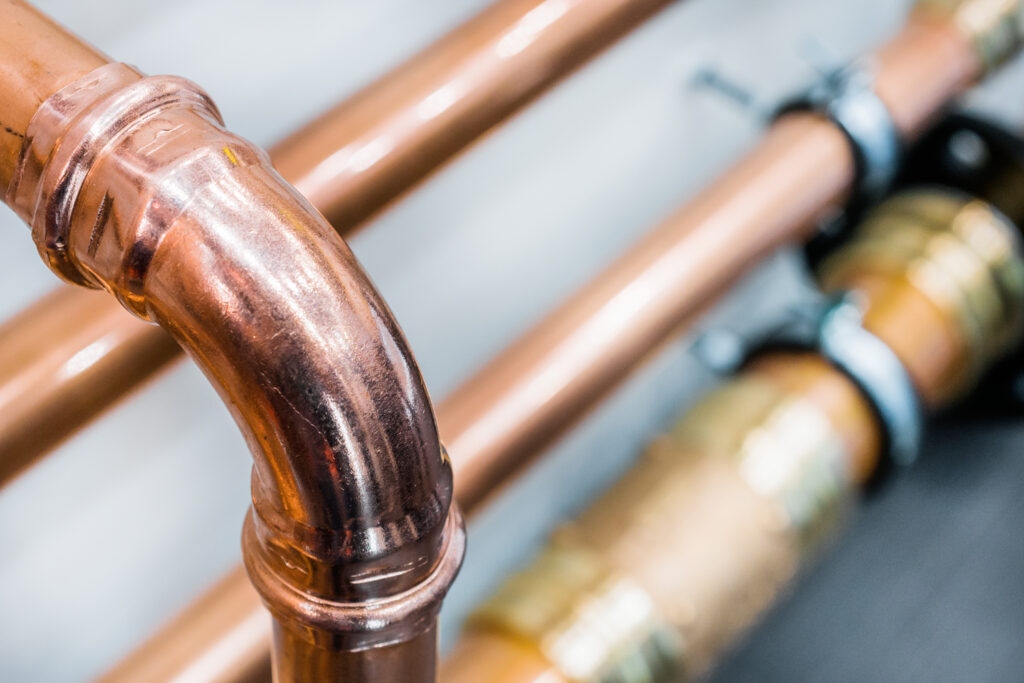
Copper is widely used in UK homes because it is durable, easy to work with and suitable for hot and cold water systems. However, it can still corrode under certain conditions.
Copper may develop green or blue deposits around joints, while internal pitting can eventually cause small pinhole leaks.
Galvanised steel
Older properties may contain galvanised steel pipework. This is steel coated with zinc to slow corrosion.
As the protective zinc layer deteriorates, rust can develop inside the pipe. The internal diameter may narrow, reducing water flow and causing pressure problems.
Galvanised pipework is now much less common in modern domestic installations, but it can still be found in older homes.
Mild steel heating components
Steel radiators, pipework and boiler components can corrode internally when oxygen enters the heating system.
The resulting iron oxide can form dark magnetic sludge. This may settle in radiators, pumps, valves and narrow waterways.
Cast iron
Cast iron is often associated with older soil pipes and drainage systems. It is strong but can rust, especially where coatings have deteriorated or moisture remains in contact with the surface.
Brass fittings
Brass is commonly used for valves and fittings. Certain water conditions can cause selective corrosion, sometimes known as dezincification, where zinc is removed from the alloy.
Affected fittings may weaken, become porous or develop reddish discolouration.
Plastic pipework
Plastic itself does not corrode in the same way as metal. However, plastic systems can still fail through poor installation, heat damage, chemical exposure, ultraviolet light or deterioration of seals and fittings.
A property may contain several materials, and corrosion can sometimes be influenced by the way those materials are connected.
How does water chemistry cause corrosion?
Water is rarely chemically neutral. Its acidity, alkalinity, mineral content and dissolved gases all influence how it reacts with pipework.
Water with a low pH is more acidic and can be more aggressive towards some metals. Very soft water may also contain fewer minerals that would otherwise form a protective layer inside the pipe.
Hard water contains higher levels of calcium and magnesium. It is more strongly associated with limescale, but scale deposits can also create uneven conditions inside a pipe.
A thin, stable mineral layer may sometimes protect the pipe surface. Thick or irregular scale can create localised areas where corrosion develops beneath deposits.
Water treatment and supply conditions vary across the UK, so two similar properties in different areas may experience different pipework behaviour.
Why does oxygen matter?
Oxygen is one of the main drivers of corrosion in metal plumbing and heating systems.
Fresh mains water naturally contains dissolved oxygen. In a properly functioning domestic water system, the pipe material and water chemistry normally reach a relatively stable condition.
Problems can develop where water remains stagnant, where oxygen concentration varies across the surface or where protective layers are repeatedly disturbed.
In a sealed central heating system, oxygen should be limited after the initial fill. If fresh water is repeatedly introduced because the system keeps losing pressure, more oxygen enters each time.
This can accelerate corrosion of steel radiators and other metal components.
Frequent topping up should therefore not be treated as normal maintenance. It may indicate a leak, expansion vessel fault or pressure relief problem that needs professional attention.
What is galvanic corrosion?
Galvanic corrosion can occur when two different metals are connected in the presence of water, which acts as an electrolyte.
One metal becomes more likely to corrode than the other. The exact effect depends on the combination of metals, the water conditions and the relative surface areas involved.
This does not mean different metals can never be used together. Plumbing systems routinely include copper, brass, steel and other materials.
Problems are more likely where unsuitable combinations are joined directly without appropriate fittings, separation or design consideration.
A common concern in older or altered systems is where new copper pipework has been connected to existing steel or galvanised components without fully considering compatibility.
Professional installation reduces the risk by using suitable transition fittings and recognised methods.
Can electrical currents cause pipe corrosion?
Stray electrical currents can contribute to accelerated corrosion in some circumstances.
Metal pipework may be affected where electrical systems, earthing arrangements or nearby equipment create unintended current paths.
Modern electrical safety arrangements are complex, and homeowners should not attempt to disconnect bonding or alter electrical connections to solve a suspected corrosion problem.
If corrosion appears unusual, highly localised or associated with electrical equipment, the issue may require assessment by both a qualified plumber and a competent electrician.
Electrical and plumbing work should be coordinated rather than addressed independently where the systems interact.
How can poor installation contribute to corrosion?
Installation quality has a major effect on the life of pipework.
Problems may develop where:
- Excess flux is left inside copper pipework
- Pipes are not cleaned properly after soldering
- Different metals are connected inappropriately
- Pipework is in contact with corrosive materials
- Joints are stressed or poorly aligned
- Pipes are inadequately supported
- Protective coatings are damaged
- Moisture becomes trapped around the pipe
- Incorrect products are used on the system
Flux is used during soldering to help create a sound joint. Excessive or poorly removed flux can remain chemically active and contribute to localised copper corrosion.
Pipework should also be adequately supported. Movement, vibration and thermal expansion can strain joints or damage protective surfaces.
A leak that repeatedly wets surrounding pipework can then create external corrosion as well as damage to the building.
Why does corrosion develop beneath insulation?
Pipe insulation is intended to reduce heat loss and protect against freezing, but badly fitted or wet insulation can create problems.
If moisture enters and remains trapped against a metal pipe, the surface may stay damp for long periods. This can cause corrosion beneath the insulation, hidden from view.
Possible sources of moisture include:
- Condensation
- A nearby pipe leak
- Water entering from above
- Damp building materials
- Poorly sealed external pipe insulation
- Installation over an already wet pipe
This is sometimes described as corrosion under insulation.
The insulation may look intact while the metal beneath it deteriorates. Suspicion should increase if there is staining, dampness, swelling or an unexplained smell around insulated pipework.
Wet insulation should not simply be left to dry without checking the condition of the pipe and identifying the moisture source.
How do concrete, plaster and building materials affect pipes?
Some building materials can create corrosive conditions when they remain damp or are in direct contact with metal pipework.
Copper pipes passing through walls, floors or screeds should be installed with suitable protection where required. This may involve sleeving, wrapping or using another approved barrier.
Problems can occur if pipes are embedded directly in materials that react with the metal or restrict necessary movement.
Pipework also expands and contracts as temperatures change. If a pipe is tightly trapped in masonry or screed, movement can damage the surface or place stress on joints.
During renovation, old pipes may be uncovered with damaged coverings or signs that they have been in contact with damp materials for many years.
A plumber should assess whether the exposed section can be protected or whether replacement is safer.
Can stagnant water increase corrosion?
Water that remains still for long periods can create conditions that encourage localised corrosion.
Stagnation may occur in:
- Redundant pipe branches
- Little-used bathrooms
- Empty rental properties
- Holiday homes
- Pipework serving removed appliances
- Oversized or poorly designed systems
Unused sections, sometimes called dead legs, can also create water hygiene concerns because water is not regularly refreshed.
Where an outlet or appliance has been removed, the redundant branch should normally be dealt with properly rather than simply capped at a distant point and left full of stagnant water.
Properties left empty for long periods may benefit from a planned flushing and inspection routine. Any concerns about water hygiene should be addressed with appropriate professional advice.
What causes corrosion in central heating systems?
Central heating corrosion usually occurs when oxygen reacts with metal components in the system.
Steel radiators are a common source of iron oxide. Copper, brass, aluminium and other materials may also be present, creating a mixed-metal environment.
Corrosion can be accelerated by:
- Frequent introduction of fresh water
- Leaks that allow oxygen into the system
- Inadequate corrosion inhibitor
- Poorly maintained system water
- Incorrect chemical treatment
- Air entering through open-vented arrangements
- Poor commissioning
- Long-term sludge accumulation
The resulting debris can circulate before settling in low-flow areas.
Common effects include:
- Radiators cold at the bottom
- Noisy pumps or boilers
- Restricted pipework
- Sticking valves
- Reduced heating performance
- Boiler overheating
- Repeated component failures
A magnetic filter may capture some circulating iron oxide, but it does not stop corrosion on its own. The underlying water quality and system condition must also be addressed.
What are the visible signs of pipe corrosion?
Visible signs vary according to the material and the substances present.
Possible indicators include:
- Green or blue deposits on copper
- White crusty deposits around joints
- Orange or brown rust
- Flaking metal
- Dark staining
- Moisture around fittings
- Pitting or rough surfaces
- Swollen or damaged coatings
- Repeated pinhole leaks
- Staining beneath pipe insulation
A deposit around a joint may indicate a very small leak that has evaporated and left minerals behind.
The pipe may feel dry at the time of inspection even though water escapes intermittently when pressure or temperature changes.
Do not scrape or disturb heavily corroded pipework unnecessarily. A weakened section may begin leaking when touched.
Can corrosion cause discoloured water?
Yes. Corroded metal pipes and fittings can affect the colour, taste or appearance of water.
Brown, orange or reddish water may be associated with iron or rust. Blue-green staining can sometimes be linked to copper.
However, discolouration can also originate from the water supply, maintenance work in the area, deposits within a storage tank or disturbance elsewhere in the system.
A useful first observation is whether the problem affects:
- One tap only
- Hot water only
- Cold water only
- Every outlet
- Water after it has stood overnight
- Water continuously throughout the day
If only one tap is affected, the problem may be local to the fitting or nearby pipework.
If all cold outlets are affected, the water supplier may need to be contacted. Persistent metallic taste, particles or unusual colour should be investigated rather than assumed to be harmless.
Can corrosion reduce water pressure?
Corrosion can reduce water flow when deposits build up inside the pipe.
This is particularly common in older galvanised steel pipework. Rust and mineral deposits gradually narrow the internal opening, even where the outside still looks reasonably sound.
The result may be poor flow at taps, slow-filling appliances or a noticeable drop when more than one outlet is used.
Low pressure has many other possible causes, including:
- A partly closed stop tap
- A leak
- A restricted valve
- A blocked tap aerator
- Poor incoming mains flow
- Kinked flexible hoses
- Undersized pipework
A plumber can compare flow at different points to determine whether the restriction is localised or affects the wider system.
Replacing a tap will not solve low flow caused by heavily restricted supply pipework.
Why do pinhole leaks develop in copper pipes?
Pinhole leaks are very small perforations through the pipe wall.
They may be caused by localised pitting corrosion, which attacks a small area more deeply than the surrounding surface.
Contributing factors can include water chemistry, excessive flow velocity, poor workmanship, flux residue, stagnation, deposits and local turbulence.
One pinhole leak does not always mean the whole system is failing. However, several leaks appearing in different places over a short period suggest a broader problem.
Repeatedly cutting out and replacing individual sections may become uneconomical if the remaining pipework is similarly affected.
An assessment should consider the age of the pipes, water conditions, installation history and location of previous failures.
Does limescale protect pipes or damage them?
Limescale is not the same as corrosion, although the two can interact.
In hard-water areas, calcium carbonate can deposit inside hot water pipes, taps, valves and heat exchangers.
A thin, stable layer may sometimes reduce direct contact between water and metal. Heavy scale, however, can restrict flow and create uneven surfaces.
Deposits may cause localised differences in oxygen concentration, allowing corrosion to develop beneath or around them.
Scale can also reduce the efficiency of hot water equipment and place stress on components.
Removing scale requires care. Aggressive treatment may expose already weakened metal or damage unsuitable components.
The best approach depends on the material, extent of build-up and affected equipment.
Can household chemicals damage pipework?
Some chemicals can damage pipes, seals and fittings.
Repeated use of highly caustic drain cleaners may affect certain materials, especially if the product remains trapped in a blocked pipe.
Chemical vapours and spills can also attack exposed metal pipework in cupboards, garages or utility rooms.
Products containing chlorine, acids or strong alkalis should be stored safely and kept away from vulnerable plumbing components.
Homeowners should avoid mixing cleaning chemicals. This can create dangerous gases as well as damaging the drainage system.
If a powerful drain product has already been used, tell the plumber before they dismantle the pipework. This helps them work safely and use appropriate protective equipment.
Can external salt air accelerate corrosion?
Coastal properties can experience increased external corrosion where metal components are exposed to salty air and moisture.
Airborne salts can settle on outdoor pipework, boiler terminals, fixings and other components. When combined with damp conditions, this may speed up surface deterioration.
Homes in Devon’s coastal areas may therefore benefit from periodic inspection of external fittings and exposed metalwork.
Suitable materials, coatings and installation methods should be used for the environment. Damaged protective finishes should be addressed before corrosion spreads.
Salt exposure is usually one factor among several. It does not mean every coastal plumbing system will deteriorate rapidly, but external components should not be assumed to be maintenance-free.
How can homeowners help prevent corrosion?
Homeowners cannot control every aspect of water chemistry or hidden pipe installation, but several sensible measures can reduce risk.
These include:
- Repairing leaks promptly
- Avoiding frequent heating-system top-ups
- Keeping pipe insulation dry and intact
- Arranging annual boiler servicing
- Maintaining heating-system inhibitor
- Investigating repeated pressure loss
- Avoiding harsh chemical drain treatments
- Keeping exposed pipework away from corrosive products
- Using qualified professionals for alterations
- Checking older pipework during renovation
Changes should be based on evidence. Adding chemicals without testing or mixing incompatible treatments can create further problems.
For heating systems, water treatment should follow the equipment manufacturer’s requirements and recognised industry practice.
For drinking water pipework, only suitable products should be used.
Is corrosion covered by regular plumbing maintenance?
Routine inspections can identify visible warning signs, but concealed corrosion is more difficult to detect.
A plumber may examine accessible joints, valves and pipes for staining, leaks, pitting or poor support. They may also ask about water quality, pressure, previous leaks and any history of pipe replacement.
In heating systems, signs such as dirty filter contents, dark radiator water, repeated air build-up or cold patches can suggest internal corrosion.
Plumbing maintenance is especially worthwhile when:
- The property is older
- Pipe materials are mixed
- Several repairs have already been completed
- Water pressure has changed
- Renovation work will expose hidden pipes
- The heating system contains sludge
- The house has been empty for an extended period
Homeowners needing help with ageing or damaged pipes can explore Toms & Co’s plumbing services.
When can a corroded pipe be repaired?
A local repair may be suitable where corrosion is confined to a short section and the surrounding pipe remains sound.
The plumber may cut out the damaged part and install new pipe and fittings.
This can work well where:
- The cause was a local leak or external moisture
- The remaining pipe wall is in good condition
- There is no pattern of repeated failure
- Access is straightforward
- The pipe material remains serviceable
- The repair can be completed without stressing nearby sections
The damaged area should still be considered in context.
For example, replacing a corroded section beneath a leaking fitting is unlikely to provide a lasting solution unless the original leak is also corrected.
When should pipework be replaced?
Wider replacement may be more sensible when deterioration is extensive or failures are recurring.
Replacement should be considered where:
- Several pinhole leaks have developed
- Galvanised pipes are heavily restricted
- Corrosion affects long concealed runs
- Joints and valves are failing repeatedly
- Water quality is being affected
- The pipe material is obsolete or unsuitable
- Renovation work already exposes the system
- Repair costs are accumulating
- Another leak would cause serious damage
A complete repipe is a significant project. It may involve floors, walls, ceilings, cupboards and decoration.
The work can sometimes be completed in stages, prioritising the most vulnerable sections first. However, partial replacement must be planned carefully so that remaining older pipework is not left in a more problematic arrangement.
Should old pipes be replaced during renovation?
Renovation provides one of the best opportunities to inspect and replace questionable pipework.
When walls and floors are already open, the additional disruption may be lower than returning after the finishes have been completed.
Before deciding, consider:
- The age and material of the existing pipes
- Signs of corrosion or previous leaks
- Whether the layout is changing
- Whether valves remain accessible
- Whether water pressure is adequate
- Whether the heating system is being upgraded
- How difficult future access would be
Keeping visibly deteriorated pipes behind a newly tiled bathroom or fitted kitchen may create avoidable risk.
Replacement is not automatically necessary just because pipework is old. Sound copper pipes can remain serviceable for many years. The decision should be based on condition, history and suitability.
Can corrosion indicate a wider plumbing problem?
Yes. Corrosion is sometimes the result of another unresolved issue.
For example:
- External corrosion may indicate a hidden leak
- Heating sludge may point to frequent oxygen entry
- Pitting near joints may reflect poor installation
- Wet insulation may indicate condensation or water ingress
- Repeated pinholes may suggest water chemistry concerns
- Corroded valves may indicate long-term seepage
Treating only the visible metal can leave the root cause in place.
A professional investigation should ask why the corrosion developed, not only how to replace the damaged piece.
This is particularly important when several different components show similar deterioration.
Frequently Asked Questions
Is green staining on copper pipe dangerous?
Green staining does not automatically mean the pipe is about to fail. It may result from surface oxidation, condensation or a tiny leak that has left deposits. The area should be checked for moisture, pitting and thinning, especially around joints.
Can corroded pipework affect drinking water?
It can. Internal corrosion may contribute to discolouration, metallic taste or particles. These symptoms can also have other causes, so persistent changes should be investigated and the water supplier contacted where the issue affects the incoming supply.
Does painting a rusty pipe stop corrosion?
Paint may protect sound metal from further external exposure if the surface is properly prepared and the correct coating is used. Painting over active rust, moisture or a leaking pipe will not solve the underlying problem.
Why is my central heating water black?
Black heating water usually contains iron oxide produced by internal corrosion of steel components. The system may need cleaning, leak investigation, inhibitor treatment and checks of filters, pumps and radiators.
Can plastic pipes replace corroded metal pipes?
Suitable plastic pipe systems can be used in many domestic applications, but the product must be appropriate for the temperature, pressure and location. Some areas may still require metal pipework or additional protection. A plumber should design the replacement rather than selecting material on price alone.
Corrosion in domestic pipework can result from water chemistry, oxygen, mixed metals, poor installation, trapped moisture, chemical exposure and ordinary age. The damage may develop slowly, but once the pipe wall is weakened, leaks and restrictions can appear with little warning.
Visible deposits, rust, pinhole leaks, discoloured water, falling pressure and cold radiator patches all deserve investigation. An isolated damaged section may be repairable, while repeated failures or widespread deterioration may make replacement more practical.
For advice on corroded, leaking or ageing pipework in Devon, contact Toms & Co Plumbing and Heating on 01752 427417 or email James_toms123@icloud.com.
Find out more: Toms & Co Plumbing and Heating