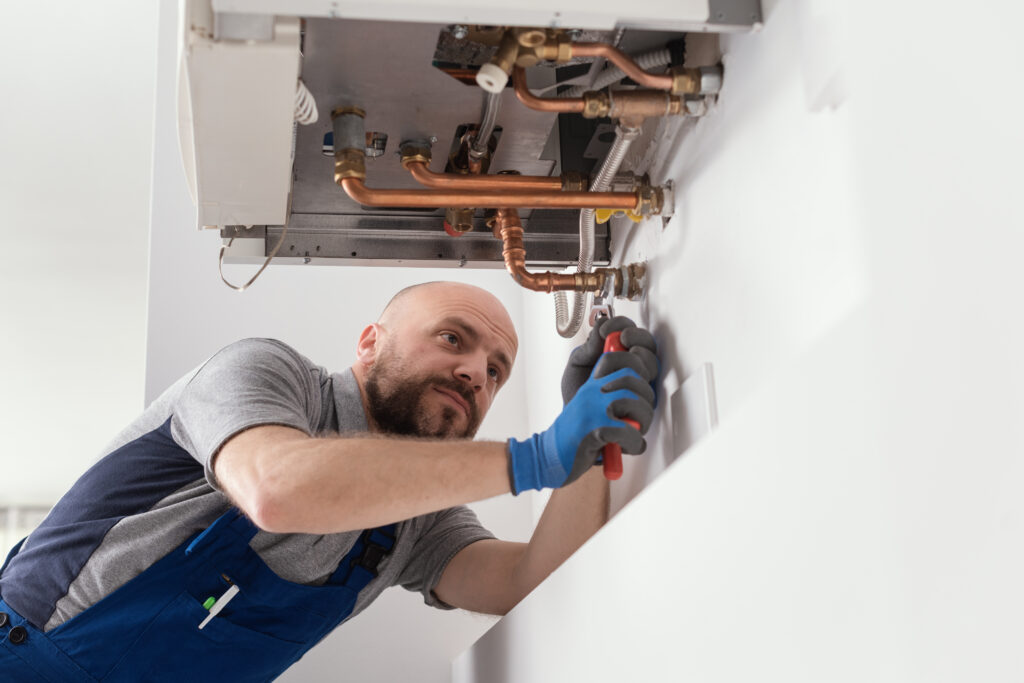
Choosing a reliable plumber or heating engineer can make the difference between a straightforward repair and an expensive, recurring problem. The person you appoint may be working on drinking-water supplies, concealed pipework, heating equipment or gas appliances, so price should not be the only consideration.
A suitable tradesperson should have experience relevant to the job, explain the proposed work clearly and provide appropriate documentation. For gas work, they must also be registered and qualified for the specific appliance or task involved.
Online reviews and personal recommendations can help you draw up a shortlist, but they should form only part of the decision. Homeowners should also check credentials, compare the scope of quotations, understand payment terms and ask how unexpected work will be handled.
The objective is not necessarily to find the cheapest contractor or the business with the most reviews. It is to choose someone who is competent, transparent, properly authorised and suited to the particular project.
Start by defining the work you need
Before contacting tradespeople, write down what is happening and what outcome you need.
For a repair, note:
- When the problem started
- Which rooms or fixtures are affected
- Whether the fault is constant or intermittent
- Any error codes or unusual noises
- Whether water pressure has changed
- Whether a leak is active
- What temporary action has already been taken
For planned work, explain the broader aim. A bathroom installation, boiler replacement or central heating upgrade requires more information than a dripping-tap repair.
Useful details might include the property type, number of bathrooms, current boiler model, proposed layout and whether building or electrical work is also involved.
Photographs can help a business understand the likely scope before arranging a visit. However, a responsible plumber or engineer may still need to inspect the property before providing a firm quotation.
A clear brief also makes competing proposals easier to compare. If each contractor is pricing a different interpretation of the project, the totals will not provide a meaningful comparison.
What qualifications should a plumber have?
There is no single credential covering every type of plumbing work, so the qualification required depends on the job.
For general domestic plumbing, homeowners can look for relevant training, established trade experience and membership of a recognised approved contractor scheme.
WaterSafe Register provides a free directory of approved plumbing businesses. WaterSafe states that its approved businesses have been vetted through one of the approved contractor schemes and have training relating to the Water Fittings Regulations and Byelaws. These rules help protect water quality and prevent waste, misuse and contamination.
WaterSafe approval is not the only possible indication of competence, but it gives homeowners a recognised way to verify a plumber rather than relying entirely on an advert or social media profile.
Ask the plumber whether they regularly complete the specific type of work involved. Someone experienced in routine plumbing repairs may not be the best choice for a complex wet room, extensive repiping project or specialist heating installation.
Relevant experience matters because different jobs require different knowledge of water pressure, drainage falls, waterproofing, system design and building requirements.
Homeowners looking for domestic repairs and installations can review Toms & Co’s plumbing services before discussing their requirements.
When must an engineer be Gas Safe registered?
Anyone carrying out gas work within the scope of the gas safety rules must be appropriately Gas Safe registered.
This applies to work on appliances such as gas boilers, fires, cookers and water heaters. It can include installation, servicing, repair and disconnection.
Do not accept statements such as “gas trained”, “fully qualified” or “registered with the council” as substitutes for checking the official register.
The Gas Safe Register allows homeowners to search for an engineer or business using identifying details such as a registration number, business name or engineer’s licence number.
Registration must be current at the time of the work. A certificate or training course completed many years ago does not confirm that the individual remains authorised.
How do you check a Gas Safe identification card?
A Gas Safe registered engineer should carry an identification card.
The front identifies the engineer and includes their photograph, expiry date and unique licence number. The back lists the categories of gas work they are qualified to undertake.
This second check is important. An engineer may be registered for certain appliances but not others. The Gas Safe Register confirms that the work categories shown on the back of the card indicate which specific types of gas work the engineer can complete.
Before work starts:
- Check that the photograph matches the person attending.
- Check that the card has not expired.
- Confirm the licence number through the official register.
- Look at the categories on the back.
- Make sure the relevant appliance and type of work are covered.
A professional engineer should not object to this check. It is a normal and reasonable part of protecting your household.
Does a heating engineer always need Gas Safe registration?
Not every heating system uses gas.
An engineer working exclusively on electric heating, certain heat pumps or non-gas system components may not need Gas Safe registration for that particular task. However, Gas Safe registration is required when the work involves a gas appliance or gas installation.
Heating work also extends beyond the boiler. Pumps, radiators, controls, valves, cylinders, underfloor heating and system water can all require specialist knowledge.
Ask whether the engineer has experience with your system type and the proposed work. For example, fitting a replacement boiler, balancing radiators and designing an underfloor heating system require overlapping but different skills.
Where the work is subject to Building Regulations, using an installer registered with an appropriate competent person scheme may simplify compliance. GOV.UK explains that registered installers can self-certify certain work and provide a compliance certificate after completion.
How important are recommendations?
Recommendations from people you trust can be valuable, especially when the person has used the tradesperson for similar work.
Ask what kind of job was completed, how recently it was done and whether any problems emerged later. A recommendation based on a small tap repair does not necessarily establish that the same contractor is suitable for a full heating-system replacement.
Citizens Advice identifies personal recommendations and references as useful ways to find reliable traders. It also advises consumers to verify references rather than relying only on written testimonials.
Useful questions for the person recommending the contractor include:
- Did they arrive when agreed?
- Was the price close to the quotation?
- Was the work completed cleanly?
- Were changes explained before being charged?
- Did the repair last?
- Were certificates and instructions provided?
- How did the contractor respond to any problem?
A recommendation provides useful evidence, but it should not replace qualification and insurance checks.
How should you assess online reviews?
Online reviews can reveal patterns, but individual comments should be treated carefully.
Look across more than one platform where possible. A reliable business may have reviews on Google, trade directories or social media, but the number alone does not prove quality.
Consider:
- Whether reviews span a reasonable period
- Whether they describe specific work
- Whether customers mention communication and aftercare
- Whether negative reviews receive calm, constructive replies
- Whether the review profile appears natural
- Whether the business name and location remain consistent
A perfect score based on a handful of vague reviews provides less evidence than a long record of detailed customer experiences.
Negative feedback does not automatically make a business unsuitable. Plumbing and heating work can involve unexpected faults, delayed parts and difficult access. How the company responds can be as informative as the original complaint.
Watch for repeated concerns about missed appointments, increasing prices, unfinished work or failure to return after payment.
Should you ask for references?
For substantial work, asking for recent references can be sensible.
A contractor may be able to provide contact details for customers who have agreed to discuss comparable projects. Respect their privacy and keep questions focused on the work.
Ask whether:
- The scope was similar to yours
- The project stayed close to budget
- The contractor communicated delays
- The property was left clean and secure
- Faults or snagging were resolved
- The customer would use the business again
References are particularly useful for complete bathroom installations, boiler replacements and heating-system alterations because these projects involve planning and coordination as well as technical work.
Photographs of past jobs can support the discussion, but images do not prove who carried out the work or how it performed later. Treat them as useful examples rather than complete verification.
What should a site visit tell you?
A professional site visit should involve more than a quick glance followed by a price.
The plumber or engineer should inspect the relevant system, ask questions and explain what can and cannot be confirmed before work begins.
For a boiler replacement, this might include assessing the existing appliance, controls, radiators, flue route, gas supply, condensate drainage and hot water demand.
For a bathroom project, the installer may consider water pressure, waste routes, floor construction, ventilation and access to existing pipework.
Pay attention to whether the contractor:
- Listens to the problem
- Examines the relevant areas
- Explains possible causes
- Distinguishes facts from assumptions
- Identifies access limitations
- Discusses more than one reasonable option
- Avoids pressuring you into an immediate decision
A professional does not need to diagnose every concealed problem before opening the structure. They should, however, explain the uncertainty and how it would be managed.
What should be included in a quotation?
A useful quotation should define what you are buying.
It should identify the proposed work, significant materials, total price, VAT position and any exclusions. For larger projects, it should also cover the payment schedule and expected programme.
Citizens Advice distinguishes a quotation from an estimate. A quote is an agreed price for the described work, while an estimate is a trader’s best assessment of the likely cost. Additional charges to a quoted price should normally relate to justified extra work that the customer has agreed.
A plumbing or heating quotation may include:
- Customer and property details
- Description of the problem or project
- Labour included
- Main products and materials
- Appliance make and model
- Controls and accessories
- Removal of old equipment
- Waste disposal
- Testing and commissioning
- Building Regulations notification where applicable
- Warranty details
- VAT
- Deposit and payment stages
- Likely start date or lead time
- Important exclusions
Do not assume that the lowest quote includes the same work as the others. One boiler quotation might include a system filter, new controls and system cleaning, while another covers only the appliance.
Ask for unclear terms to be explained in writing before accepting.
Should you collect several quotations?
For planned or high-value work, obtaining two or three comparable quotations is usually sensible.
This gives you an opportunity to compare:
- Proposed solutions
- Product quality
- Scope of preparation
- Warranties
- Timescales
- Payment terms
- Communication
- Overall cost
The purpose is not simply to encourage price competition. Different proposals may reveal considerations that the first contractor missed.
A quotation far below the others deserves careful examination. The contractor may have found a simpler solution, but essential labour, materials, certification or preparatory work may also be absent.
For an emergency leak, gathering several detailed quotations may not be practical. You should still ask about call-out charges, hourly rates and likely costs before authorising non-emergency additional work.
What is a reasonable deposit?
Deposits may be appropriate when a contractor must order an appliance, sanitaryware or other materials specifically for the project.
The amount should be proportionate and clearly documented. Avoid paying the entire cost before work begins unless there is a compelling and well-explained reason.
A staged payment arrangement can link payments to meaningful progress, such as ordering materials, completing first-fix work and commissioning the finished installation.
Payment terms should state:
- The amount due initially
- What the deposit covers
- When later payments become due
- Whether any payment is refundable
- How approved variations will be charged
- What remains payable after completion
Be cautious when someone insists on immediate cash payment, refuses to issue paperwork or substantially changes the payment terms after being appointed.
Keep invoices, receipts and written correspondence.
Why does insurance matter?
A professional plumbing or heating business should hold insurance appropriate to its work.
Public liability insurance can provide protection if the contractor accidentally causes injury or property damage. Businesses employing staff may also require employers’ liability insurance.
Insurance does not guarantee good workmanship, but the absence of suitable cover can expose both parties to greater risk.
For substantial projects, ask for confirmation of insurance and check that the details match the person or company named on the quotation.
You may also wish to ask whether warranties are backed by the manufacturer, installer or a separate scheme. An installer’s verbal promise is different from a written warranty with defined terms.
Read warranty conditions carefully. Some require annual servicing or registration within a certain period.
How can you tell whether the proposed solution is appropriate?
A reliable tradesperson should be able to explain why they recommend a particular repair, appliance or system.
For example, a boiler recommendation should not be based only on bedroom count. The engineer should consider heat loss, hot water demand, existing controls and the home’s water supply.
A drainage repair should address why the blockage or leak developed rather than simply clearing the immediate symptom.
Ask:
- What is causing the problem?
- How certain is the diagnosis?
- Are there alternative repairs?
- What happens if the work is postponed?
- Which parts will be replaced?
- What remains unchanged?
- How long should the repair last?
- What maintenance will be needed?
Be cautious of someone who recommends complete replacement without inspecting the system or explaining why repair is unsuitable.
Equally, repeated low-cost repairs may not represent good value where pipework or equipment is failing throughout.
What communication should you expect?
Reliable contractors communicate clearly before, during and after the work.
They should confirm appointments, explain delays and tell you before carrying out chargeable work outside the agreed scope.
For larger projects, establish a main contact and decide how changes will be approved. Written messages are useful because they create a record of decisions.
Good communication includes being honest about uncertainty. Plumbing problems behind walls and beneath floors cannot always be diagnosed completely until access is created.
The contractor should explain:
- What has been confirmed
- What remains uncertain
- The possible consequences
- How additional work would be priced
- When your approval will be requested
Silence followed by a significantly larger invoice is a warning sign.
What paperwork should you receive after the work?
The paperwork depends on the job.
For a small repair, an itemised invoice may be sufficient. For boiler installations or regulated work, you may need commissioning documents, warranties and Building Regulations compliance certification.
A competent person scheme installer can self-certify relevant work and should provide the appropriate certificate. GOV.UK notes that this certificate can be important evidence of compliance and may appear during searches when the property is sold.
Useful documents can include:
- Final invoice
- Product instructions
- Warranty registration
- Commissioning checklist
- Gas safety documentation where relevant
- Building Regulations certificate
- Test results
- Maintenance advice
- Records of system treatment
- Photographs of concealed work
Keep these documents with the property records. They can help with servicing, warranty claims and a future sale.
Which warning signs should homeowners avoid?
No single warning sign proves that a trader is unreliable, but several together should make you cautious.
Potential concerns include:
- Refusal to provide a business address or written quotation
- Pressure to make an immediate decision
- Demands for full payment in advance
- Gas work offered without verifiable registration
- A quotation that does not define the work
- Unwillingness to discuss insurance
- No explanation of guarantees
- Recommending major replacement without inspection
- Asking you to obtain permits or certificates that should form part of their work
- Cash-only payment without a receipt
- Repeatedly changing the start date without explanation
- Poor communication before the project has begun
Citizens Advice continues to receive substantial numbers of complaints concerning home maintenance and improvement work, including poor-quality services and rogue traders. Its guidance recommends checking traders carefully, obtaining written agreements and keeping records.
Trust your judgement. A professional manner does not prove technical competence, but evasive answers and pressure tactics are reasons to pause.
Is the cheapest plumber usually the best value?
Not necessarily.
The cheapest option may be entirely suitable for a simple, well-defined repair. However, a lower price can also result from cheaper materials, reduced preparation, missing certification or an incomplete scope.
Value should consider:
- Quality of diagnosis
- Relevant qualifications
- Materials used
- Work included
- Expected lifespan
- Warranty
- Aftercare
- Risk of repeat failure
A repair that costs slightly more but addresses the underlying cause can be better value than repeatedly paying to treat the symptom.
The most expensive quotation is not automatically the best either. Ask each contractor to explain the work so you can compare like with like.
Should you choose a local plumber or a national company?
Both local and national businesses can provide reliable work.
A local plumber or heating engineer may offer:
- Familiarity with local housing
- Shorter travel distances
- Direct communication
- Ongoing servicing and repair support
- Knowledge of regional water conditions
- A reputation tied closely to the area
A larger company may provide wider office support, extended operating hours or a bigger workforce.
The right choice depends on the job and the evidence of competence. A local business should still provide qualifications, insurance and paperwork. A national brand should not be assumed reliable solely because its name is familiar.
For homeowners in Devon, choosing a genuinely local company can be useful when ongoing boiler servicing, heating maintenance or future plumbing work is likely.
What should you do if the work goes wrong?
Raise the issue with the contractor as soon as possible and explain clearly what you believe is wrong.
Set out:
- The agreed work
- The problem identified
- When it appeared
- What resolution you expect
- A reasonable response deadline
Put the complaint in writing and keep photographs, invoices and messages.
Give the business a reasonable opportunity to inspect and correct the work where appropriate. Arranging another contractor immediately may make it harder to establish what happened unless urgent action is needed to prevent danger or damage.
Citizens Advice provides guidance for consumers who are unhappy with home improvement work or another paid service. It also explains routes for seeking further help when a dispute cannot be resolved directly.
Gas safety concerns should be treated separately from ordinary workmanship disputes. Stop using equipment that may be unsafe and obtain appropriate professional or emergency assistance.
Frequently Asked Questions
Should a plumber provide a free quotation?
Some businesses offer free quotations for planned work, while others charge for diagnostic visits or surveys. Either approach can be reasonable, provided the charge is explained before the appointment. A detailed diagnosis may require time, testing and professional expertise.
Can a plumber work on a boiler without Gas Safe registration?
A plumber can complete certain non-gas plumbing tasks, but work on the gas appliance itself must be completed by an engineer who is Gas Safe registered and qualified for that category of work. Always check the individual attending, not only the company name.
Is membership of a trade association essential?
Not necessarily, but recognised scheme membership can provide additional evidence of qualifications, standards and insurance. Verify membership directly with the organisation rather than relying solely on a logo displayed on a van or website.
How many quotations should I obtain?
Two or three quotations are useful for substantial planned work. A single quotation may be sufficient for a trusted existing contractor or a small repair, provided the scope and cost are clear. Emergency situations may require a faster decision.
Should I buy the boiler or bathroom fittings myself?
Buying products directly may appear cheaper, but it can complicate compatibility, delivery, damage and warranty responsibility. Discuss this with the installer first. A contractor supplying the equipment can usually confirm suitability and take clearer responsibility for the complete installation.
Choosing a reliable plumber or heating engineer involves more than finding the lowest price or the first available appointment. Check the qualifications relevant to the job, verify Gas Safe registration where required and make sure the proposed work is explained clearly.
For larger projects, compare written quotations, understand payment terms and confirm what paperwork, guarantees and aftercare will be provided. Recommendations and reviews are useful, but they should support rather than replace proper checks.
For dependable plumbing, heating, boiler and gas work across Devon, contact Toms & Co Plumbing and Heating on 01752 427417 or email James_toms123@icloud.com.
Find out more: Toms & Co Plumbing and Heating